
Ramiz Nukic lives on a hillside a few miles from Srebrenica, a hillside that happened to be the sight of one of the largest ambushes in the genocidal campaign conducted by Bosnian Serb forces in July of 1995. In a cruel twist of fate, Ramiz was caught in that ambush in 1995 while attempting to flee with thousands of other displaced Muslims who had sought refuge in the so-called UN “safe zone” in Srebrenica. His father, brother, and uncle were likely killed in the ambush, not far from the home where they lived before the war. When Ramiz was able to return to his family home a few years after the genocide, he was shocked to find human remains scattered all around the valley, still laying there since the ambush in 1995. Today, Ramiz spends everyday roaming this hillside and the valley below searching for the bones or any trace of those lost in that ambush. He seeks to allow the other survivors of the genocide a chance to mourn and gain closure by giving them remains to bury. The bones and artifacts that Ramiz recovers are handed over to the International Commission on Missing Persons, who then undertake the laborious process of cleaning the remains and attempting to match them with their database of DNA samples provided by the families of the victims. To date, his work has aided in the identification of over 200 victims and during this undertaking, he has found everything from complete skeletons to just single bones that matched remains found in mass graves miles away. Ramiz’s mission has almost cost his life, several times while on his search he has uncovered live mines and grenades, traps set by Serbian forces after the ambush. He receives no compensation for this work and feels it is his duty to continue his work to help the families that are still waiting.
The bones and artifacts that Ramiz recovers are handed over to the International Commission on Missing Persons, who then undertake the laborious process of cleaning the remains and attempting to match them with their database of DNA samples provided by the families of the victims. To date, his work has aided in the identification of over 200 victims and during this undertaking, he has found everything from complete skeletons to just single bones that matched remains found in mass graves miles away. Ramiz’s mission has almost cost his life, several times while on his search he has uncovered live mines and grenades, traps set by Serbian forces after the ambush. He receives no compensation for this work and feels it is his duty to continue his work to help the families that are still waiting.
I have had the privilege of meeting and photographing Ramiz twice. The first time I met Ramiz, he eagerly led the group students I was with up a steep hillside exposed to the harsh July sun. We were not expecting this impromptu hike in the Eastern Bosnian countryside so many of tripped and stumbled through the bramble and bushes as Ramiz led the group into a thicket of trees at an impressive pace for a man in his 50’s currently chain smoking. Ramiz motioned for the group to stop and gestured to us all to gather close to him. He stopped and gingerly swept away some dead leaves, revealing his finds from that morning; a small piece of skull, a shard of a hip, a finger bone, and a house key. There was no way to know if these pieces belonged to a single person, or to multiple victims. But what was clear to all of us was that these small pieces of bone once belonged (to at least one) living, breathing, human being who had once had a life like us, with dreams, with aspirations, who had loved, who had cried, and that life had been cut short, that person had died running for their life on this hillside, and that mud-coated key would never unlock it’s home again.
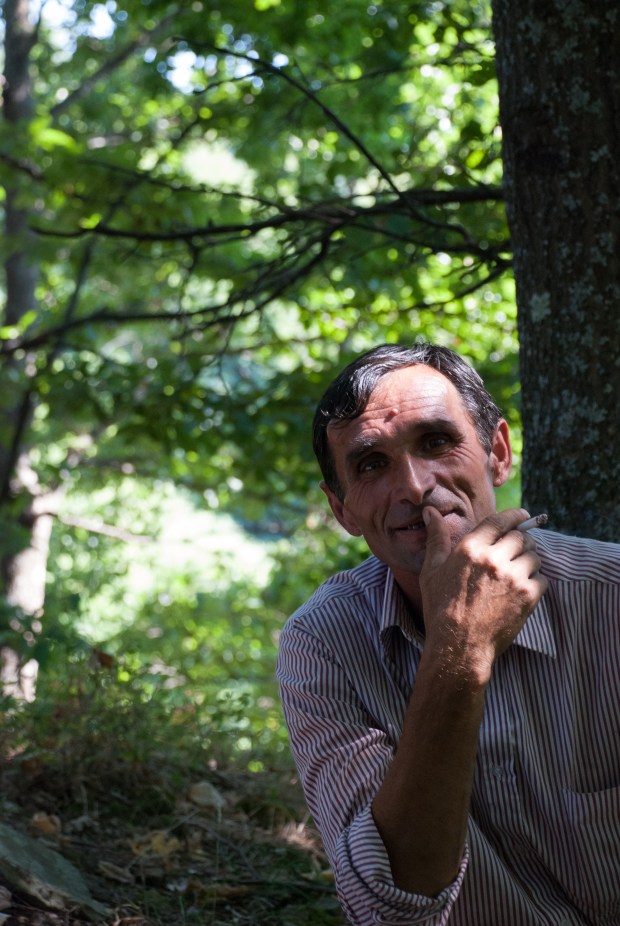
After answering a few questions, I asked Ramiz if I could take his portrait. He nodded and posed, squatting close to the ground holding his cigarette casually by his face. Our Bosnian guides all said he looked like a cool action movie star and this should be the cover for his book. Ramiz laughed and responded that he would only write a book if it could be a movie too.
A year later, I had the chance to meet Ramiz again at his home. This time, he decided to forgo the hike and address us from his yard. He was very excited about what he had to show us that day. He went over to his house and came back with a nondescript shopping bag, holding it very delicately. With great care, he laid each of the items out of the ground in front of him. Among them was a femur and a piece of a jawbone, complete with molars. These were what Ramiz had been excited about. Femurs and teeth often contain the best preserved DNA material, so there was a strong likelihood these remains could be positively identified by the ICMP. Ramiz then told us harrowing tales about all the time he had found active landmines or traps while out searching for remains. While our guides asked him in shock what he did when he found himself in those situations, Ramiz seemed unfazed, shrugging and letting a shy grin peek out, explaining that he had learned to deactivate grenades and mines during the war.
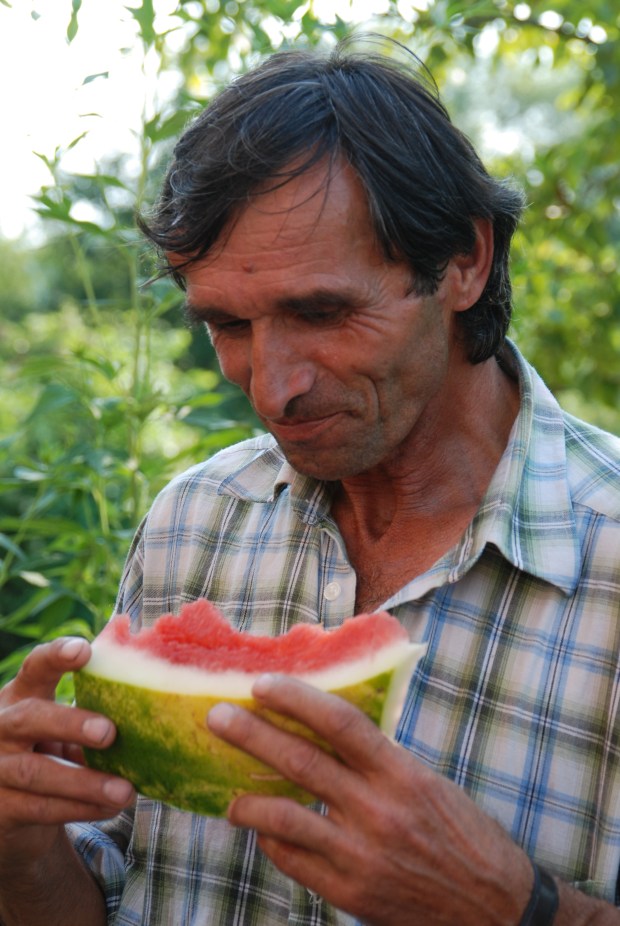
Ramiz was very generous again with allowing us to take his picture. I opted for some more candid shots this year, hoping to capture at least some of the passion Ramiz feels about this mission he has taken upon himself. As we were departing someone mentioned there needed to be a film about Ramiz, and everyone started to muse about eh starring roles of such a production, Ramiz cracked a grin and remarked he could play the lead, unless they got Robert Deniro sign on.
 Annalisa Wants to Share Something With You